Commentary: The London Zoo helps animals with this one simple act
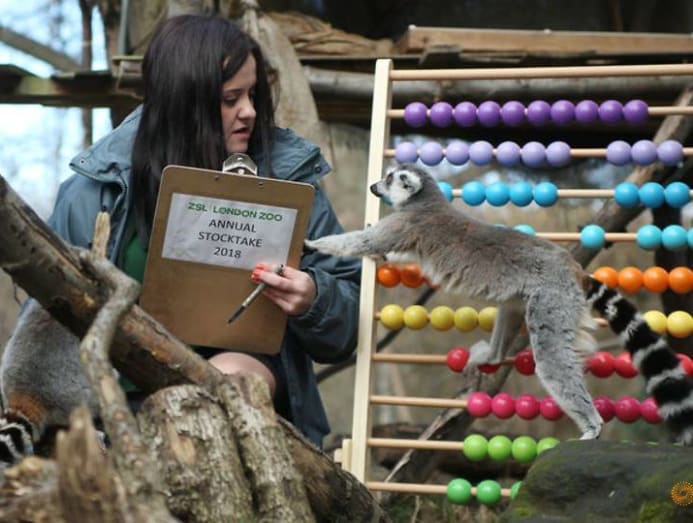
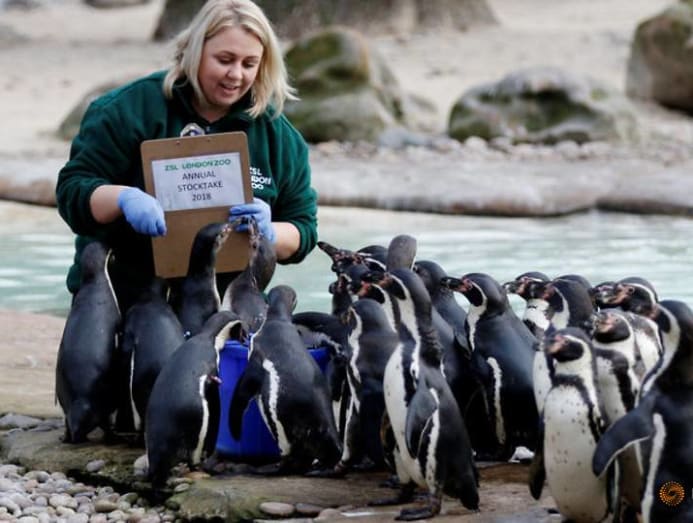
READING: Every August, the London Zoo weighs and measures every ane of its xix,000 animals.
Information technology'southward a bang-up public relations move for the zoo, guaranteeing lots of friendly coverage of photogenic animals on scales or adjacent to record measures, at a time when many politicians and journalists have clocked off for the summer.
But, as a wild fauna conservation researcher and a former zookeeper, I take seen exactly how these sorts of almanac "counterbalance-ins" also helped the animals themselves.
Recording the weights and size of animals in a zoo directly benefits their welfare, and could potentially aid in the global conservation of their wild counterparts.
KEEPING Track OF Furry FRIENDS
Monitoring the health of the animals in your charge is a large part of what being a keeper is all about.
You do this by getting to know the individuals and noting whatever changes in their behaviour each day equally you would your ain pet. Yous even appraise their droppings, looking at colour and solidity – which makes for interesting conversation on forenoon java breaks.
Although these observations are useful, they can be a bit subjective. Past taking measurements such as weight y'all immediately accept something a fleck more concrete that tin can be used to evaluate well-beingness and review the effectiveness of husbandry methods.
Too, giving the right dosage of food supplements or medicines often requires you to know the weight of an creature.
WEIGHING ANIMALS
Small creatures like snakes or lizards tin exist put into a pillow case and weighed using hanging scales. A trained handler can fifty-fifty agree venomous snake species such equally a black mamba against a tape measure.
However larger mammals are a bit trickier. Whether it is a lemur or rhinoceros, it often involves time, endeavour and patience to railroad train i to walk onto a set of scales.
Usually in that location is some form of food advantage to help entice them onto the scales in the first place and then to continue them stationary long enough for a reading.
For the most dangerous mammals of all, like the African leopards I worked with, zookeepers have to either target train them with nutrient (using a stick with meat on the end) or wait until there is a reason to sedate them and then counterbalance them.
If you think this sounds difficult, it is null compared to the challenges faced out in the wild. There, this kind of information is usually just gathered when the species is specifically being studied and merely so typically when the animate being is under sedation for enquiry purposes (for instance to fit a GPS tracking collar).
Often the species that are being studied have been officially assessed as threatened with extinction, based on population numbers and trends, types of threat and conservation effort.
Although populations demand to exist monitored directly over time to cheque for increases or decreases, they tin can also exist modelled based on basic data such as weight, life expectancy and convenance rates to give an thought of what the population is likely to do under different circumstances.
GAPS IN CONSERVATION FOR SOME ANIMALS
In the region of 25 per cent of known animals have been classified, even so for all taxa (mammals, reptiles, birds and so on) in that location are species that have non been classified due to insufficient data.
Many of these fall into the less "charismatic" categories such as amphibians, crustaceans or fish. For case it is thought 23 per cent of assessed amphibians have not been classified while up to half of amphibian species are potentially threatened with extinction. There are even gaps in our knowledge of mammals, fourteen per cent of which have not been classified.
I attended a briefing recently where a speaker was discussing the potential for utilising the data gathered past zoos to produce models for the species with missing information and assess how vulnerable they might exist to climate change, habitat loss and other threats.
And zoos have a lot of data. Of all the thousands of threatened land vertebrate species – everything from tigers or lemurs to colourful snakes or tiny frogs – around one in seven have some individuals held in captivity somewhere. Zoos actually can fill an important role and have an impact.
This knowledge in turn could then exist used to highlight where conservation efforts and often limited funding should be focused, to increase the survival chances of more threatened species out in the wild.
Tara Pirie is a postdoctoral researcher in the University of Reading's People and Wild animals Research group. A version of this commentary starting time appeared on The Chat. Read it here.
Source: https://cnalifestyle.channelnewsasia.com/commentary/conservation-efforts-zoos-partners-help-monitor-animals-data-218011
0 Response to "Commentary: The London Zoo helps animals with this one simple act"
Post a Comment